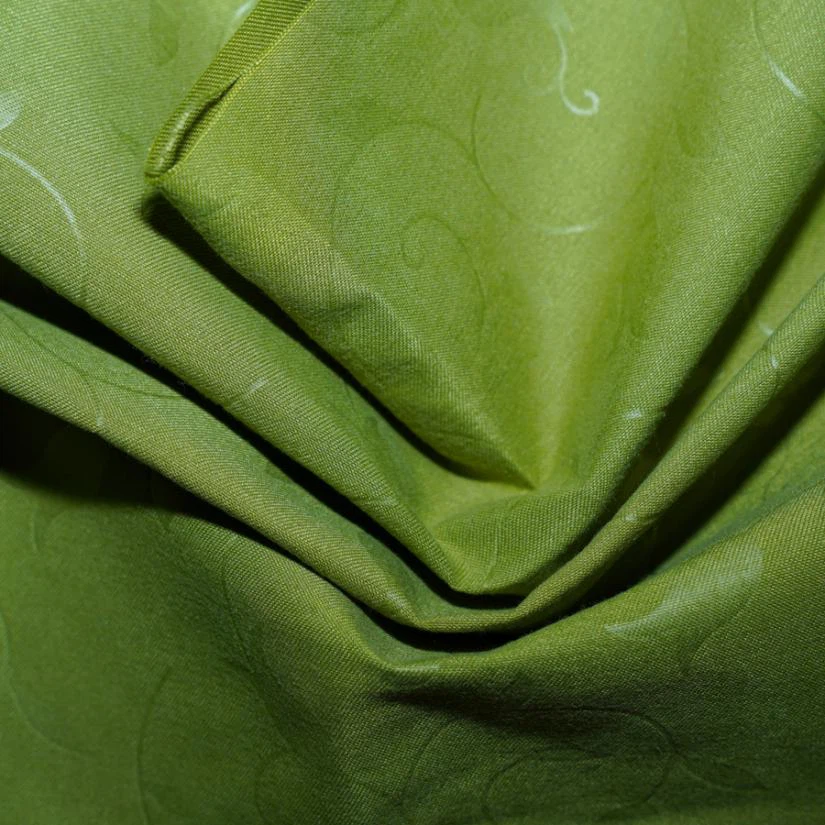
As a seasoned jacquard fabric supplier, I've encountered numerous inquiries from clients regarding the static - prone nature of jacquard fabric. In this blog, I'll delve into the science behind static electricity in fabrics, specifically focusing on jacquard fabric, and provide insights to help you understand this phenomenon better.
Understanding Static Electricity in Fabrics
Static electricity occurs when there is an imbalance of electric charges within or on the surface of a material. When two different materials come into contact and then separate, electrons can transfer from one material to the other. This transfer creates a charge imbalance, resulting in static electricity.
In the context of fabrics, friction is the primary cause of static buildup. When fabrics rub against each other or against other surfaces, electrons are transferred, leading to a static charge. Factors such as humidity, fabric composition, and the type of contact can all influence the likelihood and intensity of static buildup.
Composition of Jacquard Fabrics and Static Tendencies
Jacquard fabrics are known for their intricate patterns, which are created through a specialized weaving technique. These fabrics can be made from a variety of materials, including cotton, silk, wool, and polyester. Each material has its own characteristics that affect its static - prone nature.
Cotton Jacquard Fabrics
Cotton is a natural fiber that is relatively less likely to generate static electricity. This is because cotton can absorb moisture from the air, which helps to conduct the electrical charges away from the fabric. In normal humidity conditions, cotton jacquard fabrics tend to have minimal static buildup. However, in extremely dry environments, even cotton can develop some static, although it is usually much less pronounced compared to synthetic fibers.


Silk Jacquard Fabrics
Silk is another natural fiber. It has a smooth surface, which reduces friction and thus the potential for static generation. Silk also has some moisture - absorbing properties, which further mitigate static buildup. Silk jacquard fabrics are generally considered to be low - static materials, making them a popular choice for clothing and bedding where static can be a nuisance.
Wool Jacquard Fabrics
Wool is a natural fiber with unique properties. It is a good insulator, which means it can trap air and keep you warm. However, this insulating property also makes it more likely to generate static electricity. When wool jacquard fabrics rub against other materials, such as synthetic fibers or even against themselves, static charges can build up. Additionally, wool can become charged easily in dry conditions.
Polyester Jacquard Fabrics
Polyester is a synthetic fiber that is highly static - prone. Polyester does not absorb moisture well, and it has a smooth surface that can cause significant friction when in contact with other materials. Polyester jacquard fabrics, such as Jacquard Polyester Bedsheet Fabric and Jacquard Polyester Fabric, are more likely to develop static electricity, especially in dry environments. 100% Polyester Jacquard Fabric is particularly susceptible to static buildup due to its high polyester content.
Environmental Factors and Static Buildup
The environment plays a crucial role in determining whether jacquard fabrics will develop static electricity. Humidity is the most significant environmental factor. In high - humidity environments, the moisture in the air helps to dissipate static charges. The water molecules in the air act as conductors, allowing the excess electrons to move freely and neutralize the charges.
Conversely, in low - humidity environments, such as during the winter months when indoor heating systems dry out the air, fabrics are more likely to generate and retain static electricity. This is true for all types of jacquard fabrics, but the effect is more pronounced in synthetic fabrics like polyester.
Preventing Static in Jacquard Fabrics
If you're concerned about static in jacquard fabrics, there are several steps you can take to minimize it.
Use Anti - Static Sprays
Anti - static sprays can be applied to jacquard fabrics to reduce static buildup. These sprays work by coating the fabric with a thin layer of conductive material that helps to dissipate the static charges. You can find anti - static sprays at most home improvement or laundry supply stores.
Add Humidity to the Environment
Using a humidifier in your home can increase the humidity levels, which in turn reduces static electricity in fabrics. This is a particularly effective solution during the dry winter months. By maintaining a relative humidity of around 40 - 60%, you can significantly reduce static buildup in all types of jacquard fabrics.
Choose the Right Fabric
As mentioned earlier, natural fibers like cotton, silk, and wool are generally less static - prone than synthetic fibers. When selecting jacquard fabrics, consider the intended use and the environment in which the fabric will be used. If static is a major concern, opt for natural fiber jacquard fabrics.
Conclusion
In conclusion, whether jacquard fabric is static - prone depends on its composition and the environmental conditions. Natural fiber jacquard fabrics such as cotton, silk, and wool are generally less likely to generate static electricity compared to synthetic fibers like polyester. However, in dry environments, even natural fibers can develop some static.
At our company, we offer a wide range of jacquard fabrics, including Jacquard Polyester Bedsheet Fabric, Jacquard Polyester Fabric, and 100% Polyester Jacquard Fabric. We understand the importance of providing high - quality fabrics that meet your specific needs, whether you're looking for low - static materials or fabrics with other unique properties.
If you're interested in purchasing jacquard fabrics for your project, we invite you to contact us for more information and to discuss your requirements. Our team of experts is ready to assist you in finding the perfect jacquard fabric for your needs.
References
- Textile Science and Technology: Fundamentals of Fibers, Yarns, and Fabrics.
- Handbook of Fiber Science and Technology, Volume II: High - Technology Fibers.
- The Physics of Textiles: Structure, Properties, and Applications.