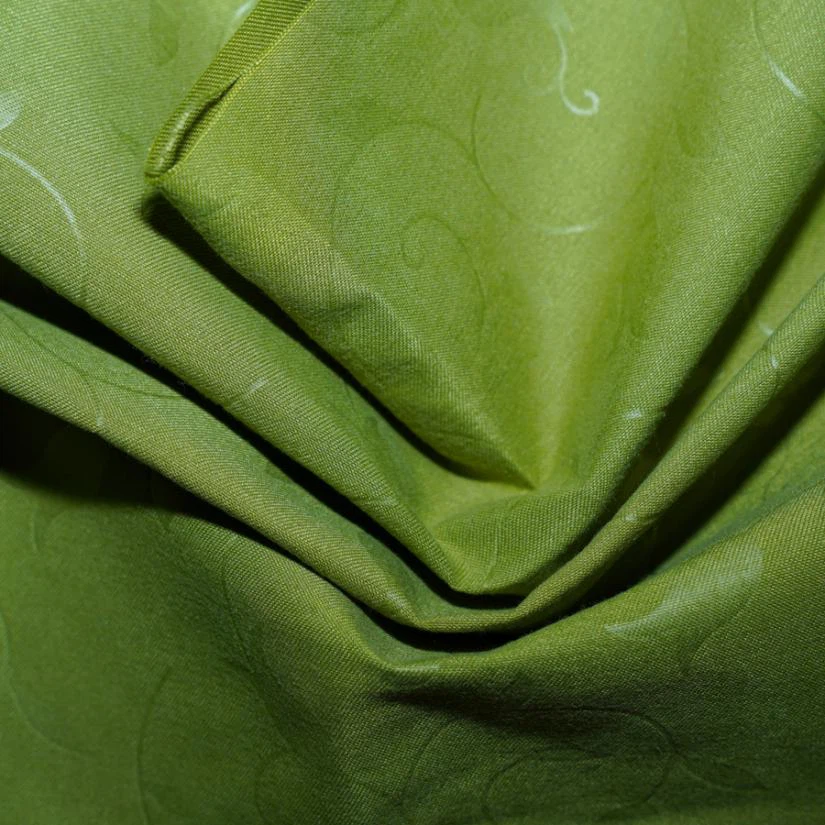
As a seasoned supplier of embossed fabric, I've encountered numerous inquiries regarding the measurement of the embossed area on fabric. This topic is crucial not only for quality control but also for meeting the specific requirements of our clients in various industries, such as bedding, fashion, and interior design. In this blog post, I'll share some effective methods to measure the embossed area on fabric, drawing from my years of experience in the field.
Understanding the Importance of Measuring Embossed Area
Before delving into the measurement methods, it's essential to understand why measuring the embossed area matters. For manufacturers, accurate measurement ensures consistency in product quality. It helps maintain the desired aesthetic appeal and functionality of the embossed fabric. In the bedding industry, for example, Embossed Polyester Fabric for Bedding with a well - defined embossed area can enhance the overall look and feel of the bedding set, providing a luxurious touch to the consumers.
For designers and buyers, knowing the embossed area is vital for cost - estimation and design planning. They can calculate the amount of material required and determine if the embossed pattern meets their design specifications. Whether it's a large - scale project or a custom - made piece, precise measurement of the embossed area is a key factor in the decision - making process.
Visual Inspection and Estimation
The simplest way to get a rough idea of the embossed area is through visual inspection and estimation. This method is quick and can be done on - site without the need for specialized equipment. However, it's less accurate and is more suitable for a preliminary assessment.
To use this method, lay the fabric flat on a smooth surface under good lighting conditions. Observe the embossed pattern and mentally divide it into simple geometric shapes, such as rectangles, circles, or triangles. Estimate the dimensions of these shapes and calculate their areas using basic geometric formulas. For example, if the embossed pattern resembles a rectangle, measure the length and width with a ruler and multiply them to get the area.
While this method is easy and convenient, it's prone to human error, especially when dealing with complex or irregular embossed patterns. Therefore, it's recommended to use more accurate measurement techniques for critical applications.
Image Analysis
Image analysis is a more accurate and objective method for measuring the embossed area on fabric. With the advancement of digital technology, this method has become increasingly popular in the textile industry.


To use image analysis, you'll need a high - resolution camera or a scanner to capture an image of the fabric. Make sure the fabric is flat and the image is clear and well - lit. Avoid any shadows or reflections that could affect the accuracy of the measurement.
Once you have the image, transfer it to a computer and use image processing software, such as Adobe Photoshop or ImageJ. These software programs allow you to select the embossed area on the image and calculate its area. In ImageJ, for example, you can use the "Freehand Selection" tool to trace around the embossed pattern, and then use the "Analyze" menu to calculate the area.
Image analysis offers several advantages over visual inspection. It can handle complex patterns with high precision and provides a digital record of the measurement. However, it requires some technical skills and the use of specialized software. Additionally, the accuracy of the measurement depends on the quality of the image and the calibration of the software.
3D Scanning
3D scanning is a cutting - edge technology that can provide highly accurate measurements of the embossed area on fabric. This method uses a 3D scanner to capture the surface geometry of the fabric, creating a three - dimensional model.
To perform 3D scanning, place the fabric on the scanner's platform and follow the scanner's instructions to capture the data. The scanner emits light or laser beams onto the fabric surface and measures the reflection or interference patterns to create a detailed 3D model. Once the model is created, you can use 3D modeling software to analyze the embossed area.
3D scanning offers unparalleled accuracy and can capture even the smallest details of the embossed pattern. It's particularly useful for measuring complex or irregular patterns that are difficult to measure using other methods. However, 3D scanners are expensive and require specialized training to operate. Therefore, this method is more suitable for large - scale manufacturers or research institutions.
Physical Measurement with Templates
Another method to measure the embossed area is by using physical templates. This method is similar to the visual inspection method but provides more accurate results.
To use this method, create a template of the embossed pattern using a thin, flexible material, such as cardboard or plastic. Cut out the template to match the shape of the embossed pattern as closely as possible. Place the template on the fabric and align it with the embossed area. Then, use a ruler or a caliper to measure the dimensions of the template and calculate its area.
This method is relatively simple and can be more accurate than visual inspection. However, it requires the creation of a custom - made template for each embossed pattern, which can be time - consuming and costly. Additionally, the accuracy of the measurement depends on the precision of the template.
Factors Affecting Measurement Accuracy
When measuring the embossed area on fabric, several factors can affect the accuracy of the measurement. These factors include the type of fabric, the embossed pattern, the measurement method, and the operator's skill level.
The type of fabric can influence the measurement accuracy. Fabrics with a rough or textured surface may be more difficult to measure accurately, especially when using image analysis or 3D scanning. The embossed pattern also plays a role. Complex or irregular patterns are more challenging to measure than simple geometric patterns.
The measurement method itself can introduce errors. For example, visual inspection and estimation are subject to human error, while image analysis and 3D scanning require proper calibration and technical skills. The operator's skill level is also a crucial factor. A well - trained operator is more likely to obtain accurate measurements than an inexperienced one.
Conclusion
Measuring the embossed area on fabric is an important task that requires careful consideration and the use of appropriate measurement methods. While visual inspection and estimation can provide a quick and rough assessment, more accurate methods, such as image analysis, 3D scanning, and physical measurement with templates, are recommended for critical applications.
As a supplier of Embossed White Fabric and 100% Polyester Embossed Fabric, we understand the importance of providing our clients with accurate information about the embossed area. We are committed to using the latest measurement techniques to ensure the quality and consistency of our products.
If you're interested in our embossed fabric products or have any questions about measuring the embossed area, please don't hesitate to contact us. Our team of experts is ready to assist you with your procurement needs and provide you with the best solutions for your projects.
References
- Textile Testing Handbook, Third Edition by Brian A. Brook
- Digital Image Processing by Rafael C. Gonzalez and Richard E. Woods
- 3D Scanning Technology: Principles and Applications by John R. Parker