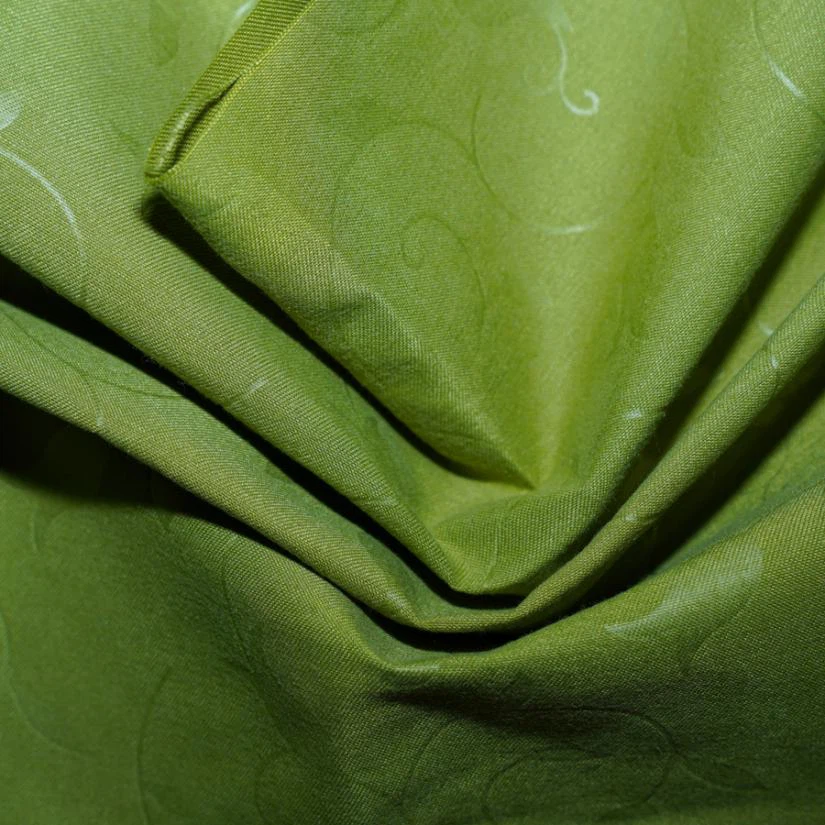
Hey there! As a supplier of pigment printed fabric, I've seen my fair share of issues when it comes to the durability of these fabrics. One of the most common problems that customers face is cracking of the print on pigment printed fabric. In this blog post, I'm gonna break down the science behind how the print on pigment printed fabric resists cracking and share some tips to keep your fabric looking great for longer.
Understanding Pigment Printing
First off, let's talk a bit about pigment textile printing. Pigment printing is a popular method for adding color and patterns to fabrics. Unlike other printing methods that rely on dyes to penetrate the fibers of the fabric, pigment printing uses pigments that are essentially tiny particles of color. These pigments are held onto the fabric's surface with the help of a binder. You can learn more about this process on our Pigment Textile Printing page.
The binder is a crucial component in pigment printing. It acts like a glue that holds the pigment particles in place on the fabric. When the fabric is printed, the binder and pigment mixture is applied to the surface, and then heat is used to cure the binder, creating a strong bond between the pigment and the fabric.
Factors Affecting Print Cracking
Now, let's get into the factors that can cause the print on pigment printed fabric to crack. There are several things that can contribute to this issue:
1. Binder Quality
The quality of the binder used in the printing process plays a huge role. A low - quality binder may not form a strong enough bond with the fabric or the pigment particles. Over time, as the fabric is stretched, bent, or washed, the weak bond can break, causing the print to crack. That's why we always use high - quality binders in our 100% Polyester Pigment Printed Fabric and Polyester Pigment Printed Fabric to ensure maximum durability.
2. Fabric Type
Different fabrics have different properties, and some are more prone to print cracking than others. Fabrics that are very stretchy or have a loose weave may put more stress on the print. For example, a highly elastic fabric may stretch the print more during normal use, which can lead to cracking. We carefully select the fabrics we use for pigment printing to minimize this risk.
3. Printing Process
The way the fabric is printed also matters. If the printing pressure is too high or the curing temperature is not right, it can affect the quality of the print. For instance, if the curing temperature is too low, the binder may not fully cure, resulting in a weak bond. On the other hand, if it's too high, it can damage the fabric or the binder, also leading to cracking.
4. Environmental Conditions
Environmental factors such as humidity and temperature can also impact the print. High humidity can cause the fabric to absorb moisture, which may weaken the bond between the binder and the fabric. Extreme temperatures, either very hot or very cold, can also cause the fabric and the print to expand or contract, leading to cracking.
How the Print Resists Cracking
So, how does the print on our pigment printed fabric resist cracking? Here are the key mechanisms:
1. High - Quality Binders
As I mentioned earlier, we use top - notch binders. These binders are formulated to have excellent flexibility and adhesion. They can withstand the normal stretching and bending that the fabric goes through during use. They also form a strong bond with both the pigment particles and the fabric fibers, preventing the print from coming loose.
2. Proper Printing Techniques
Our printing process is carefully calibrated. We use the right amount of pressure and the correct curing temperature to ensure that the binder fully cures and forms a strong, uniform bond. This helps the print to stay intact even under stress.
3. Fabric Selection
We choose fabrics that are suitable for pigment printing. Fabrics with a stable structure and moderate stretch are preferred. This reduces the amount of stress on the print and minimizes the risk of cracking.
4. Post - Printing Treatments
After printing, we may apply some post - printing treatments to enhance the durability of the print. These treatments can help to further strengthen the bond between the pigment, binder, and fabric, and also protect the print from environmental factors.
Tips to Keep the Print Looking Good
Here are some tips for you to keep the print on your pigment printed fabric from cracking:


1. Follow Care Instructions
Always follow the care instructions provided with the fabric. For example, wash the fabric in cold water and use a gentle detergent. Avoid using harsh chemicals or bleach, as they can damage the print.
2. Avoid Excessive Stretching
Try not to stretch the fabric more than necessary. When wearing or using products made from pigment printed fabric, be gentle and avoid rough handling.
3. Store Properly
Store the fabric in a cool, dry place. Avoid storing it in areas with high humidity or extreme temperatures.
Conclusion
In conclusion, the print on our pigment printed fabric resists cracking through a combination of high - quality binders, proper printing techniques, careful fabric selection, and post - printing treatments. However, as a user, you also play an important role in maintaining the integrity of the print. By following the tips I've shared, you can ensure that your pigment printed fabric looks great for a long time.
If you're interested in purchasing our pigment printed fabric, whether it's our 100% Polyester Pigment Printed Fabric or Polyester Pigment Printed Fabric, don't hesitate to reach out for a quote or to discuss your specific requirements. We're here to help you find the perfect fabric for your project.
References
- "Textile Printing Technology" by XYZ Publishing
- "Pigment Printing in the Textile Industry" by ABC Research Group