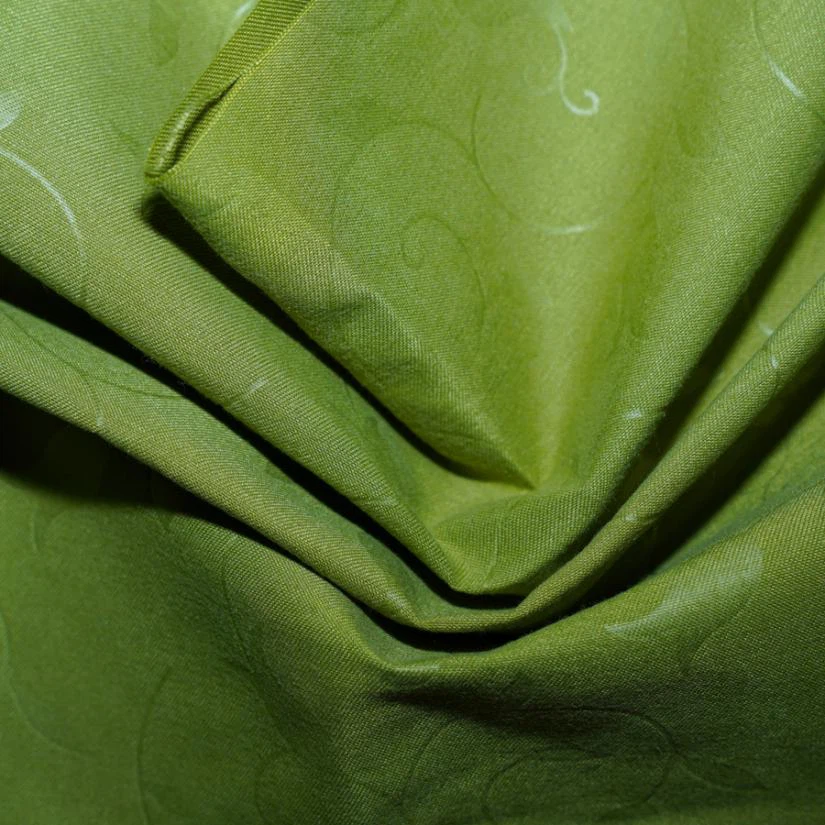
Polyester sheet fabric is a widely used material in various industries, from bedding and clothing to industrial applications. As a leading supplier of Link: Polyester Sheet Fabric, I often get asked about its heat - transfer properties. In this blog post, I'll delve into the science behind the heat - transfer characteristics of polyester sheet fabric, explaining how it behaves under different conditions and why it matters for different uses.
Understanding Heat Transfer
Before we discuss the heat - transfer properties of polyester sheet fabric, it's essential to understand the basic principles of heat transfer. There are three main mechanisms of heat transfer: conduction, convection, and radiation.
Conduction is the transfer of heat through a material without any movement of the material itself. It occurs when there is a temperature gradient within a solid or between two solids in contact. For example, when you place a hot object on a table, heat is conducted from the hot object to the table surface.
Convection involves the transfer of heat by the movement of a fluid (liquid or gas). When a fluid is heated, it becomes less dense and rises, while cooler fluid moves in to take its place. This creates a convection current that transfers heat. An example of convection is the heating of a room by a radiator, where warm air rises and cooler air is drawn in.
Radiation is the transfer of heat in the form of electromagnetic waves. All objects emit thermal radiation, and the amount and wavelength of the radiation depend on the object's temperature. The sun is a prime example of a heat source that transfers heat to the Earth through radiation.
Heat - Transfer Properties of Polyester Sheet Fabric
Conduction
In terms of conduction, polyester sheet fabric has a relatively low thermal conductivity compared to metals. Thermal conductivity is a measure of how well a material can conduct heat. Metals have high thermal conductivity because they have a large number of free electrons that can easily transfer heat energy. In contrast, polyester is a polymer, and its molecular structure restricts the movement of heat.


The low thermal conductivity of polyester sheet fabric makes it a good insulator to some extent. When used in bedding, for example, it helps to keep the body warm by reducing the rate of heat loss through conduction to the surrounding environment. This is why polyester - filled duvets and pillows can provide a cozy sleeping experience.
However, the conduction properties of polyester sheet fabric can also be affected by factors such as its thickness and density. Thicker and denser fabrics generally have lower thermal conductivity as there are more layers of polymer molecules to impede the flow of heat.
Convection
Polyester sheet fabric can also influence heat transfer through convection. When used in clothing, for example, the fabric can trap a layer of air close to the body. Air is a poor conductor of heat, and this trapped air layer acts as an additional insulator, reducing the rate of convective heat transfer.
In outdoor applications, the porosity of the polyester sheet fabric can play a crucial role in its convective heat - transfer properties. A more porous fabric allows for better air circulation, which can either help to cool the body by removing warm air or prevent over - cooling by allowing regulated heat transfer. For instance, in sports clothing, moisture - wicking polyester fabrics are designed to allow sweat to evaporate, which helps to cool the body through convective heat transfer.
Radiation
Polyester sheet fabric can absorb and emit thermal radiation. The amount of radiation absorbed and emitted depends on the fabric's surface properties, such as its color and finish. Dark - colored polyester fabrics tend to absorb more radiation than light - colored ones. This is because dark colors have a higher emissivity, which means they are better at absorbing and emitting thermal radiation.
In some applications, such as in protective clothing, the ability of polyester sheet fabric to manage radiation is important. For example, fire - resistant polyester fabrics are designed to reflect and absorb a significant amount of the radiant heat from a fire, protecting the wearer from burns.
Factors Affecting Heat - Transfer Properties
Fiber Composition
The specific composition of the polyester fibers used in the sheet fabric can affect its heat - transfer properties. Different types of polyester polymers have different molecular structures, which can influence how heat is conducted, convected, and radiated through the fabric. For example, some high - performance polyester fibers may be engineered to have enhanced thermal insulation properties.
Fabric Finish
The finish applied to the polyester sheet fabric can also have a significant impact on its heat - transfer characteristics. A coating or treatment can change the surface properties of the fabric, altering its ability to absorb, reflect, or conduct heat. For example, a water - repellent finish may also reduce the fabric's ability to transfer moisture and heat through convection, as it can prevent air from passing through the fabric pores.
Moisture Content
Moisture can greatly affect the heat - transfer properties of polyester sheet fabric. When the fabric is wet, water has a higher thermal conductivity than air, which means that heat can be transferred more easily through the fabric. This is why wet clothing can feel much colder than dry clothing, as the moisture increases the rate of heat loss from the body.
Applications Based on Heat - Transfer Properties
Bedding
As mentioned earlier, the low thermal conductivity of polyester sheet fabric makes it an ideal choice for bedding. Link: Bleached Polyester Bedsheet Fabric can provide a comfortable and warm sleeping environment by reducing heat loss. Additionally, its ability to trap air helps to regulate body temperature, ensuring a good night's sleep.
Clothing
In the clothing industry, polyester sheet fabric's heat - transfer properties are exploited in various ways. For winter clothing, insulated polyester jackets use the fabric's low thermal conductivity to keep the wearer warm. In summer clothing, lightweight and breathable polyester fabrics are designed to allow for efficient convective heat transfer and moisture wicking, keeping the body cool and dry.
Industrial Applications
In industrial settings, polyester sheet fabric's heat - transfer properties are used for insulation and heat protection. It can be used as a lining in ovens and furnaces to reduce heat loss and protect the surrounding environment. Additionally, in the automotive industry, polyester fabrics can be used in seat cushions and insulation materials to manage heat transfer and improve passenger comfort.
Conclusion
The heat - transfer properties of polyester sheet fabric are complex and depend on a variety of factors, including conduction, convection, and radiation mechanisms, as well as fiber composition, fabric finish, and moisture content. Understanding these properties is crucial for selecting the right polyester sheet fabric for different applications, whether it's for bedding, clothing, or industrial use.
As a reliable supplier of Link: Polyester Bleached Fabric and other polyester - based products, I am committed to providing high - quality materials that meet the specific heat - transfer requirements of our customers. If you have a project that requires polyester sheet fabric with particular heat - transfer characteristics, I invite you to reach out for a detailed discussion. We can help you select the most suitable fabric and ensure that it meets your standards and expectations.
References
- Incropera, F. P., & DeWitt, D. P. (2001). Fundamentals of Heat and Mass Transfer. John Wiley & Sons.
- Holcombe, J. R. (2018). Heat Transfer. CRC Press.
- Textile Institute. (2019). Handbook of Textile Fibre Structure. Woodhead Publishing.