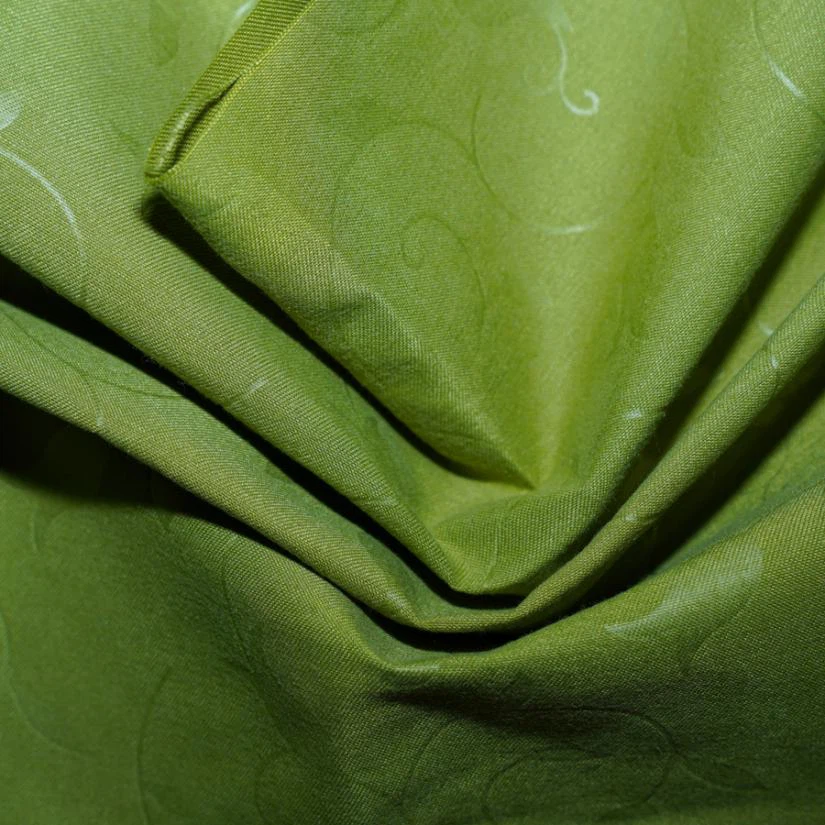
Hey there! As a supplier of disperse printed fabric, I often get asked about the differences between disperse printed fabric and other printed fabrics. So, I thought I'd take a moment to break it down for you.
First off, let's talk about what disperse printed fabric is. Disperse printing is a method that uses disperse dyes to print patterns on synthetic fabrics, mainly polyester. These dyes are designed to work well with synthetic fibers because they can penetrate the tight molecular structure of these materials. When the fabric is heated during the printing process, the dyes turn into a gas and bond with the fibers, creating a long - lasting and vivid print.
Now, let's compare it with some other common printed fabrics.
Screen - Printed Fabrics
Screen printing is one of the oldest and most well - known printing methods. In screen printing, a stencil is created on a fine mesh screen. Ink is then forced through the open areas of the screen onto the fabric. This method is great for printing on a variety of fabrics, including cotton, silk, and polyester.
The main difference between screen - printed fabrics and disperse printed fabrics lies in the complexity of patterns and durability. Screen printing is better for large, solid - color designs. It can create bold, opaque prints. However, when it comes to detailed patterns with a lot of colors, screen printing can be challenging. Each color requires a separate screen, and registering the colors accurately can be tricky.
On the other hand, disperse printed fabric can handle highly detailed and multi - colored patterns with ease. Since the dyes bond directly with the synthetic fibers, the prints are less likely to fade or wash out over time. For example, if you're looking for a fabric with a complex floral pattern or a detailed graphic, disperse printed fabric is a better choice. Check out our Printed Woven Fabric for some great examples of detailed disperse prints.


Digital - Printed Fabrics
Digital printing has become increasingly popular in recent years. It's similar to how a home inkjet printer works, but on a much larger scale. Digital printers can print high - resolution images directly onto the fabric, allowing for almost limitless design possibilities.
The advantage of digital printing is its flexibility. You can print one - off designs or small batches without the need for expensive setup costs like in screen printing. However, digital - printed fabrics often use water - based inks, which may not be as durable on synthetic fabrics as disperse dyes.
Disperse printed fabric, as mentioned earlier, uses dyes that bond chemically with the synthetic fibers. This means that the prints on disperse printed fabric are more resistant to abrasion, washing, and sunlight. If you're making outdoor clothing or items that will be subject to a lot of wear and tear, disperse printed fabric is a more reliable option. Our Micro Print Fabric showcases the precision and durability of disperse printing, even in very fine patterns.
Pigment - Printed Fabrics
Pigment printing is another common method. Pigments are tiny particles of color that are bonded to the fabric using a binder. This method can be used on a wide range of fabrics, both natural and synthetic.
Pigment - printed fabrics have a soft hand feel, but the prints may not be as vibrant or long - lasting as disperse printed fabrics. Pigment prints can sometimes feel a bit "stiff" or "coated" on the fabric surface. Disperse dyes, on the other hand, penetrate the fibers, resulting in a more natural look and feel.
Also, pigment printing may not be as effective on synthetic fabrics as disperse printing. The binder used in pigment printing may not adhere well to the smooth surface of synthetic fibers, leading to prints that are more likely to crack or peel. Our Patterned Polyester Fabric demonstrates how disperse printing can create beautiful, long - lasting patterns on polyester.
Advantages of Disperse Printed Fabric
- Vibrant Colors: Disperse dyes can produce extremely vivid and bright colors. The colors remain true even after multiple washes, making the fabric ideal for fashion and home decor items where colorfastness is important.
- High - Resolution Prints: Whether it's a detailed photo - realistic image or a complex geometric pattern, disperse printing can reproduce it with high precision.
- Suitability for Synthetic Fabrics: Since it's specifically designed for synthetic fibers like polyester, disperse printed fabric offers a better print quality and durability on these materials compared to other printing methods.
Applications of Disperse Printed Fabric
Disperse printed fabric has a wide range of applications. In the fashion industry, it's used for making sportswear, swimwear, and lingerie. The durability and colorfastness of disperse prints make them perfect for clothing that is exposed to water, sweat, and friction.
In home decor, disperse printed fabric can be used for curtains, bedding, and upholstery. The ability to create large - scale, detailed patterns adds a touch of luxury to any room.
If you're in the market for high - quality disperse printed fabric, I'd love to hear from you. Whether you're a fashion designer looking for the perfect fabric for your next collection or a home decorator in need of unique materials, we can provide you with the best disperse printed fabrics. Reach out to start a conversation about your specific needs, and let's work together to bring your ideas to life.
References
- Textile Printing: Principles and Practice by A. K. Sarkar
- Handbook of Textile and Industrial Dyeing by M. M. Burkinshaw