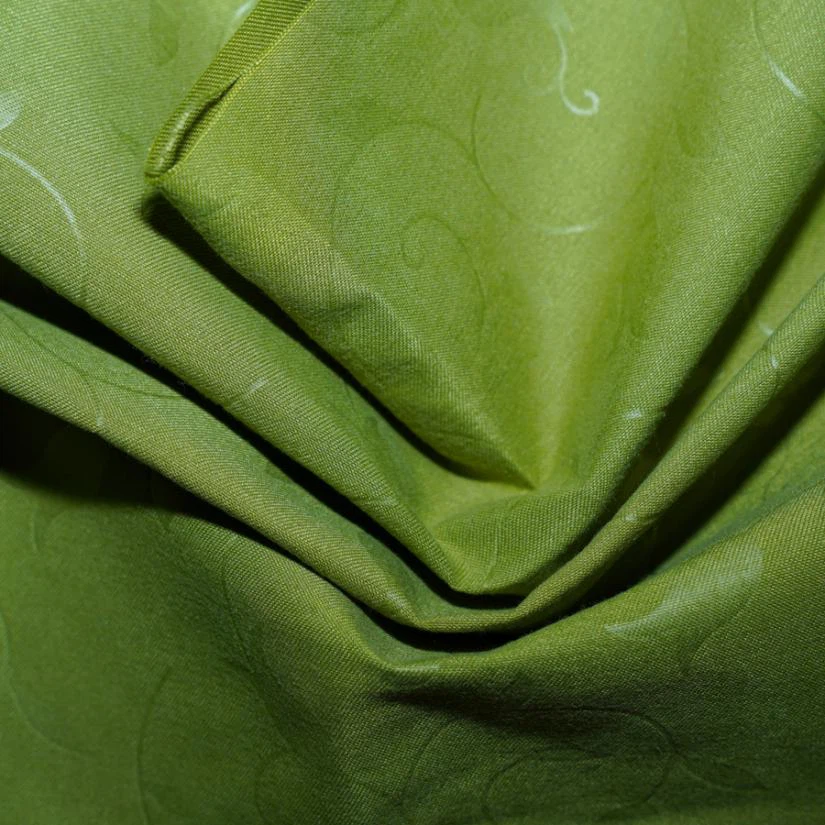
Hey there! As a supplier in the Pigment Textile Printing business, I've seen my fair share of issues, and one that pops up quite often is uneven printing. It's a real headache for both us suppliers and our customers. In this blog, I'm gonna dig deep into what causes uneven printing in pigment textile printing.
1. Pigment Dispersion Problems
One of the most common culprits behind uneven printing is the way the pigments are dispersed in the printing paste. Pigments are tiny particles, and if they're not properly dispersed, they can clump together. When these clumps pass through the printing screen or roller, they cause inconsistent color distribution on the fabric.
Let's say you're printing a beautiful pattern on a Polyester Pigment Printed Fabric. If the pigment dispersion is off, you might end up with some areas looking darker or lighter than they should. This is because the clumps of pigment deposit more color in some spots and less in others.
To avoid this, we need to make sure that the pigments are thoroughly mixed with the other components of the printing paste, like binders and thickeners. We use special mixing equipment and follow strict procedures to ensure a uniform dispersion. But sometimes, even with the best efforts, issues can still arise, especially if the raw materials have impurities or if the mixing conditions aren't just right.
2. Printing Screen or Roller Issues
The printing screen or roller is like the gateway through which the pigment paste is transferred onto the fabric. If there are any problems with these tools, it can lead to uneven printing.
For example, if the screen has clogged mesh openings, the pigment paste won't flow through evenly. This can result in blank spots or areas with less color on the fabric. On the other hand, if the screen is damaged or has uneven tension, it might not make proper contact with the fabric in some areas. This can cause the pigment to be applied unevenly.


Similarly, rollers can also cause issues. If the roller surface is dirty or has scratches, it can affect the transfer of the pigment paste. And if the pressure applied by the roller isn't consistent across the fabric width, we'll end up with uneven printing.
We regularly inspect and maintain our printing screens and rollers to prevent these problems. But over time, wear and tear are inevitable, and we need to replace these tools when necessary to ensure high - quality printing.
3. Fabric Surface Characteristics
The fabric itself can also play a big role in causing uneven printing. Different fabrics have different surface characteristics, such as porosity, smoothness, and absorbency.
Take a 100% Polyester Pigment Printed Fabric. Polyester is a synthetic fiber, and its surface is relatively smooth and less absorbent compared to natural fibers like cotton. This means that the pigment paste might not spread and adhere to the fabric as easily. If the fabric has inconsistent surface properties, like some areas being more porous than others, the pigment will be absorbed differently, leading to uneven printing.
Fabric pretreatment is crucial to address these issues. We might use processes like scouring, bleaching, and mercerizing to clean the fabric surface and improve its absorbency and uniformity. But even after pretreatment, some inherent fabric variations can still pose challenges.
4. Printing Pressure and Speed
The pressure and speed at which the printing is done are also important factors. If the printing pressure is too low, the pigment paste might not be transferred effectively onto the fabric, resulting in light or patchy areas. On the other hand, if the pressure is too high, it can cause the pigment to spread too much or even damage the fabric.
The printing speed also affects the quality of the print. If the speed is too fast, the pigment paste might not have enough time to be evenly distributed on the fabric. And if it's too slow, it can lead to over - saturation in some areas.
We need to find the right balance between pressure and speed for each type of fabric and printing design. This often requires some trial and error, especially when working with new fabrics or complex patterns.
5. Environmental Conditions
Believe it or not, the environment in which the printing is done can have a significant impact on the printing quality. Temperature and humidity are two key environmental factors.
High humidity can make the printing paste more fluid, which might cause it to spread more than intended on the fabric. This can lead to blurry or uneven prints. Low humidity, on the other hand, can cause the paste to dry too quickly, resulting in poor pigment transfer and uneven color.
Temperature also affects the viscosity of the printing paste. If the temperature is too high, the paste might become too thin, and if it's too low, it might become too thick. Both situations can lead to uneven printing.
We try to control the environmental conditions in our printing facilities as much as possible. We use air - conditioning and humidifiers to maintain a stable temperature and humidity level. But external factors like seasonal changes can still make it challenging to keep the environment perfectly consistent.
6. Binder and Thickener Issues
Binders and thickeners are important components of the printing paste. The binder is responsible for adhering the pigment to the fabric, and the thickener helps to control the flow of the paste.
If the binder isn't compatible with the pigment or the fabric, it might not bond the pigment properly. This can result in the pigment rubbing off easily or looking uneven on the fabric. And if the thickener is not of the right type or concentration, it can affect the viscosity of the paste. A paste that is too thin might spread too much, while a paste that is too thick might not flow through the screen or roller evenly.
We carefully select and test the binders and thickeners for each printing job. But sometimes, changes in the raw material quality or formulation can lead to issues, even if we've used the same products before.
Conclusion
As you can see, there are many factors that can cause uneven printing in pigment textile printing. From pigment dispersion and printing tools to fabric characteristics, environmental conditions, and the components of the printing paste, each aspect needs to be carefully managed to achieve high - quality, even prints.
At our company, we're constantly working on improving our processes and quality control measures to minimize these issues. We know how important it is for our customers to get the best - looking and most consistent printed fabrics.
If you're in the market for Pigment Textile Printing services or products, we'd love to have a chat with you. Whether you have questions about our printing capabilities, want to discuss a specific project, or just need some advice on pigment printing, don't hesitate to reach out. We're here to help you get the perfect printed fabric for your needs.
References
- Textile Printing Technology Handbook, Third Edition. Editors: Horrocks, A. R., Anand, S. C.
- Handbook of Textile and Industrial Dyeing. Editor: Christie, R. M.
- The Principles of Textile Printing. Author: Trotman, E. R.