As a supplier of waffle fabric, I often get asked various questions about its properties and usability. One question that comes up quite frequently is whether waffle fabric is resistant to mildew. In this blog post, I'll delve deep into this topic, exploring the factors that influence mildew resistance in waffle fabric and providing insights based on scientific knowledge and practical experience.
Understanding Waffle Fabric
Before we discuss mildew resistance, let's first understand what waffle fabric is. Waffle fabric is characterized by its distinct waffle-like texture, which is created through a special weaving or knitting process. This texture gives the fabric a unique appearance and also provides several functional benefits, such as enhanced breathability and absorbency.
There are different types of waffle fabric available in the market, each made from various materials. For instance, you can find Waffle Material Fabric that is made from a blend of natural and synthetic fibers, as well as 100% Polyester Waffle Fabric. The choice of material plays a crucial role in determining the fabric's properties, including its resistance to mildew.
What Causes Mildew on Fabrics?
Mildew is a type of fungus that thrives in warm, moist, and dark environments. When fabrics are exposed to these conditions for an extended period, mildew spores can land on the fabric surface and start to grow. The growth of mildew not only causes unsightly stains on the fabric but can also lead to a musty odor and damage the fabric fibers over time.
Several factors can contribute to the growth of mildew on fabrics. High humidity levels are one of the primary culprits. If the fabric is stored in a damp basement or a bathroom with poor ventilation, it is more likely to develop mildew. Additionally, if the fabric is not dried properly after being wet, such as after washing or getting exposed to rain, mildew can start to form.
Mildew Resistance of Different Waffle Fabric Materials
Natural Fiber Waffle Fabrics
Natural fiber waffle fabrics, such as cotton waffle fabric, are popular due to their softness, breathability, and absorbency. However, these fabrics are also more prone to mildew growth compared to synthetic fibers. Cotton is a natural material that can absorb a significant amount of moisture, creating an ideal environment for mildew to grow. If cotton waffle fabric is not dried thoroughly or is stored in a humid place, mildew can quickly take hold.
On the other hand, linen waffle fabric, another natural fiber option, has some natural antibacterial properties. While it is still susceptible to mildew under the right conditions, it may be slightly more resistant than cotton. Linen fibers are more porous than cotton, which allows for better air circulation and faster drying, reducing the chances of mildew growth.
Synthetic Fiber Waffle Fabrics
Synthetic fiber waffle fabrics, such as 100% Polyester Waffle Fabric, generally have better mildew resistance compared to natural fibers. Polyester is a hydrophobic material, which means it repels water and does not absorb moisture easily. This characteristic makes it less likely for mildew to grow on polyester waffle fabric.
In addition to polyester, other synthetic fibers like nylon can also be used to make waffle fabric. Nylon is known for its durability and resistance to mildew. It dries quickly and does not provide a suitable environment for mildew spores to grow.
Blended Waffle Fabrics
Blended waffle fabrics, which combine natural and synthetic fibers, offer a balance between the comfort of natural fibers and the durability and mildew resistance of synthetic fibers. For example, a cotton-polyester blend waffle fabric may have the softness and breathability of cotton while also benefiting from the mildew resistance of polyester. The ratio of natural to synthetic fibers in the blend can affect the fabric's overall mildew resistance. A higher percentage of synthetic fibers will generally result in better mildew resistance.
Improving Mildew Resistance of Waffle Fabric
Regardless of the type of waffle fabric, there are several steps you can take to improve its mildew resistance.
Proper Storage
Proper storage is essential to prevent mildew growth on waffle fabric. Store the fabric in a cool, dry place with good ventilation. Avoid storing it in basements, attics, or areas with high humidity. If possible, use a dehumidifier in the storage area to keep the humidity levels low.
Regular Cleaning and Drying
Regular cleaning of the waffle fabric can help prevent mildew growth. Wash the fabric according to the manufacturer's instructions and make sure to dry it thoroughly. Avoid leaving the fabric damp for an extended period. If the fabric is machine-washable, use a hot water setting to kill any potential mildew spores.
Use of Mildew-Resistant Treatments
There are various mildew-resistant treatments available in the market that can be applied to waffle fabric. These treatments create a protective barrier on the fabric surface, preventing mildew spores from attaching and growing. However, it's important to follow the instructions carefully when using these treatments to ensure their effectiveness and to avoid damaging the fabric.
Waffle Fabric for Bedding and Mildew Resistance
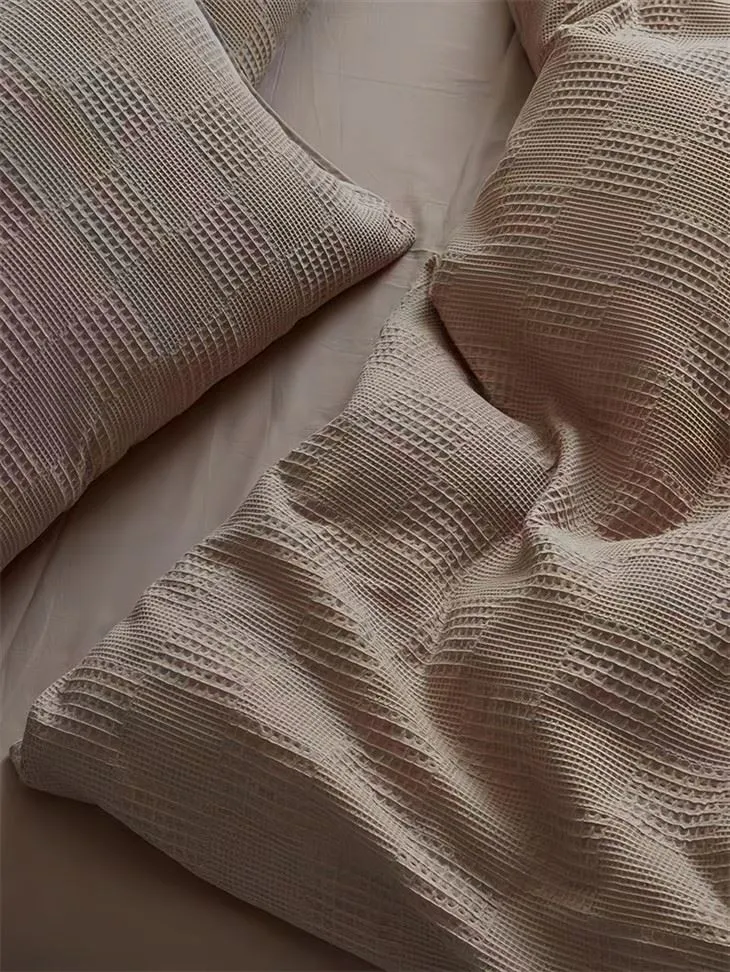
Waffle fabric is commonly used for bedding, such as sheets and duvet covers. Waffle Fabric for Bedding offers a comfortable and stylish option for your bedroom. However, since bedding is in close contact with the body and can accumulate moisture from sweating, it is important to choose a mildew-resistant waffle fabric for bedding.
When selecting waffle fabric for bedding, consider the material composition. As mentioned earlier, synthetic or blended waffle fabrics are generally more mildew-resistant than natural fiber fabrics. Additionally, look for bedding that has been treated with a mildew-resistant finish.
Conclusion
In conclusion, the mildew resistance of waffle fabric depends on several factors, including the material composition, storage conditions, and proper care. Natural fiber waffle fabrics are more prone to mildew growth, while synthetic and blended fabrics offer better resistance. By taking appropriate measures, such as proper storage, regular cleaning, and using mildew-resistant treatments, you can minimize the risk of mildew growth on waffle fabric.

If you're in the market for high-quality waffle fabric with excellent mildew resistance, we're here to help. As a leading waffle fabric supplier, we offer a wide range of waffle fabric options to meet your needs. Whether you're looking for waffle fabric for bedding, clothing, or other applications, we have the perfect solution for you. Contact us today to start a procurement discussion and find the ideal waffle fabric for your project.
References
- Textile Institute. "Textile Testing and Quality Control."
- American Association of Textile Chemists and Colorists. "AATCC Technical Manual."
- National Institute of Standards and Technology. "Handbook on Textile Science and Technology."