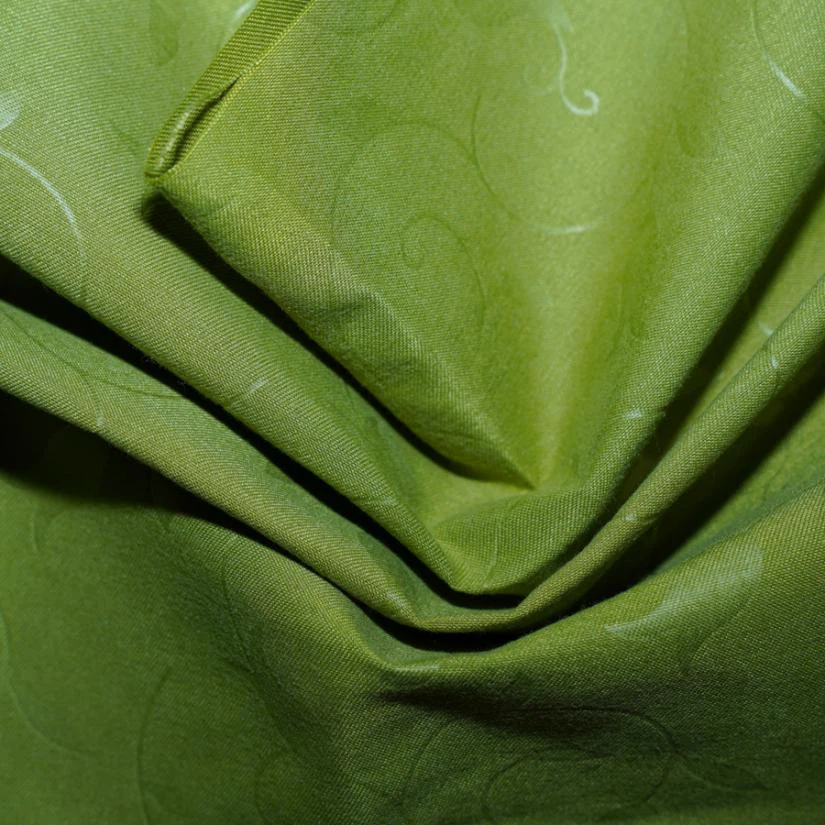
Polyester sheet fabric has become a popular choice in various industries, from bedding to outdoor applications, due to its durability, affordability, and ease of maintenance. One of the most common questions that customers often ask is whether polyester sheet fabric is waterproof. As a supplier of Polyester Sheet Fabric, I am here to provide you with a comprehensive answer based on scientific knowledge and practical experience.
Understanding Polyester Sheet Fabric
Polyester is a synthetic fiber made from polymers derived from petroleum. It is known for its strength, resistance to stretching and shrinking, and quick - drying properties. Polyester sheet fabric is created by weaving or knitting these polyester fibers together. The resulting fabric is lightweight, smooth, and has a wide range of applications. For instance, Polyester Bleached Fabric is a type of polyester sheet fabric that has undergone a bleaching process, making it suitable for use in bed linens and other products where a clean, white appearance is desired. Bed Linen Fabric often contains polyester due to its softness and durability.
The Natural Properties of Polyester and Waterproofing
By nature, polyester is hydrophobic, which means it repels water to some extent. When water comes into contact with polyester fabric, it tends to bead up and roll off rather than being absorbed. This property gives polyester an inherent ability to resist water penetration to a certain degree. However, this natural water - repellency is not the same as being fully waterproof.


The structure of polyester fibers and the way they are woven or knitted play a crucial role in determining the fabric's water - resistance. A tightly woven polyester fabric will generally be more water - resistant than a loosely woven one. For example, a high - thread - count polyester sheet fabric used in bed linens may be able to resist small amounts of spills, but it is not designed to keep water out in a heavy downpour or when fully submerged.
Factors Affecting the Waterproofness of Polyester Sheet Fabric
1. Weave and Knit Type
As mentioned earlier, the weave or knit of the fabric is a significant factor. A plain weave, where the warp and weft threads cross each other in a simple over - and - under pattern, may not provide as much water - resistance as a twill or satin weave. Twill weaves create a diagonal pattern that can make it more difficult for water to penetrate. Knitted polyester fabrics, on the other hand, have a more stretchy and porous structure, which generally makes them less water - resistant compared to woven fabrics.
2. Fabric Thickness
Thicker polyester fabrics are usually more water - resistant than thinner ones. A thicker fabric has more layers of fibers, which can act as a barrier to water. However, increasing the thickness also affects other properties of the fabric, such as its weight and breathability.
3. Surface Treatment
Many polyester sheet fabrics undergo surface treatments to enhance their waterproofness. One common treatment is the application of a water - repellent finish. These finishes are chemicals that are applied to the surface of the fabric to increase its water - repellency. They work by altering the surface tension of the fabric, making it even more difficult for water to spread and penetrate. There are different types of water - repellent finishes, including fluoropolymer - based finishes and non - fluorinated alternatives.
Testing the Waterproofness of Polyester Sheet Fabric
There are several methods to test the waterproofness of polyester sheet fabric. One of the most common tests is the hydrostatic head test. In this test, a sample of the fabric is placed under a column of water, and the pressure at which water begins to penetrate the fabric is measured. The higher the hydrostatic head value, the more waterproof the fabric is.
Another test is the spray test, where water is sprayed onto the fabric at a specified pressure and angle. The fabric is then evaluated based on the amount of water that penetrates and the degree of wetting on the back side of the fabric.
Applications Where Polyester Sheet Fabric's Waterproofness Matters
1. Outdoor Applications
In outdoor applications, such as tents, awnings, and outdoor furniture covers, the waterproofness of polyester sheet fabric is of utmost importance. For tents, a fully waterproof polyester fabric is required to keep the interior dry during rain. Manufacturers often use waterproof - treated polyester fabrics with high hydrostatic head values for these applications. Outdoor furniture covers also need to be waterproof to protect the furniture from rain and moisture.
2. Protective Clothing
In some types of protective clothing, such as raincoats and workwear, polyester sheet fabric may be used. While these fabrics may not be 100% waterproof on their own, they can be treated to provide a high level of water - resistance. This is especially important for workers who are exposed to wet conditions for extended periods.
Achieving Full Waterproofness in Polyester Sheet Fabric
To make polyester sheet fabric fully waterproof, additional steps are usually required. One common method is to laminate the fabric with a waterproof membrane. A waterproof membrane is a thin layer of material that is bonded to the polyester fabric. This membrane can be made of materials such as polyurethane or polytetrafluoroethylene (PTFE). The membrane acts as a barrier, preventing water from passing through the fabric.
Another approach is to use a coating. A waterproof coating can be applied to the surface of the polyester fabric. This coating fills the gaps between the fibers, creating a continuous barrier against water. However, coatings can sometimes affect the breathability of the fabric.
Conclusion
In conclusion, while polyester sheet fabric has some natural water - repellent properties, it is not fully waterproof in its untreated state. The fabric's ability to resist water depends on factors such as weave, thickness, and surface treatment. For applications where full waterproofness is required, additional treatments such as lamination or coating are necessary.
If you are in the market for polyester sheet fabric and need a specific level of waterproofness for your project, whether it's for outdoor use, protective clothing, or bedding, I encourage you to contact us. We have a wide range of polyester sheet fabrics with different water - resistance levels, and our team of experts can help you choose the right product for your needs. Let's start a conversation about your requirements and find the perfect solution together.
References
- "Textile Science and Technology: Fibers, Yarns, Fabrics, and Nonwovens" by Horst K. Rouette
- "Handbook of Technical Textiles" edited by A. R. Horrocks and S. C. Anand
- Industry standards and testing methods for waterproof fabrics, such as ASTM D751 and ISO 811.