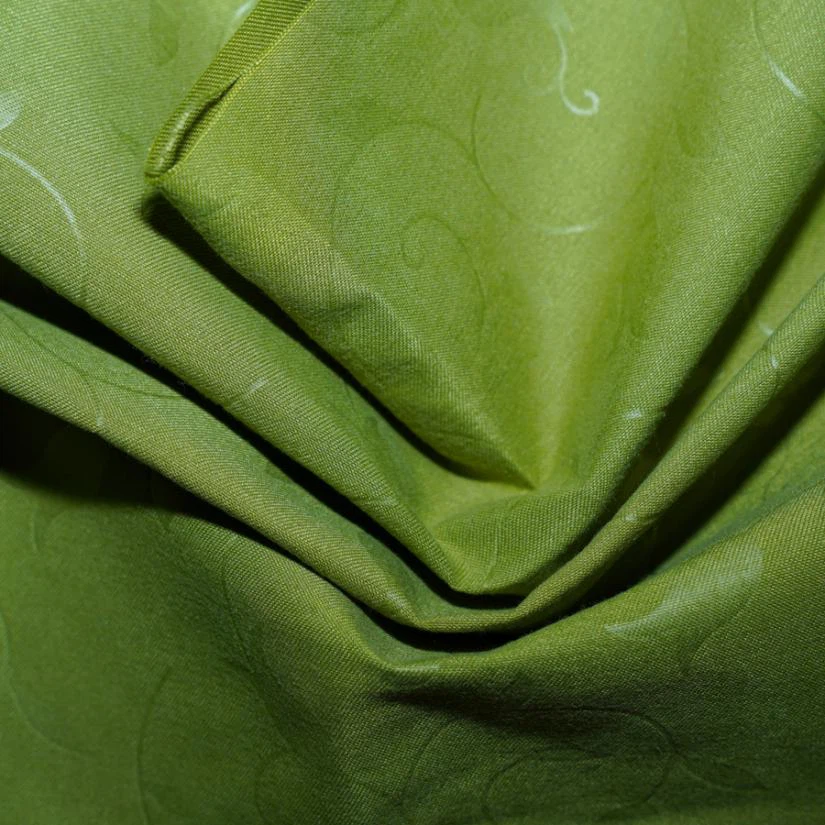
Is jacquard fabric stretchy? This is a question that often comes up when people are considering using jacquard fabric for various applications. As a jacquard fabric supplier, I've encountered this query numerous times, and I'm here to provide a comprehensive answer based on my experience and knowledge of the industry.
Jacquard fabric is known for its intricate and detailed patterns, which are created using a special weaving technique. Unlike regular woven fabrics, jacquard fabrics can have complex designs that are not limited by the basic weave structure. This makes them highly versatile and suitable for a wide range of products, from clothing and upholstery to home decor items.
The stretchiness of jacquard fabric depends on several factors, including the fiber content, the weave structure, and the finishing processes. Let's take a closer look at each of these factors.
Fiber Content
The type of fibers used in the jacquard fabric plays a significant role in determining its stretchiness. Different fibers have different properties, and some are more elastic than others.
- Natural Fibers: Fabrics made from natural fibers such as cotton, linen, and silk are generally less stretchy compared to synthetic fibers. Cotton jacquard fabric, for example, is known for its durability and breathability but has limited stretch. Linen jacquard, like the Jacquard Linen, is also relatively rigid and has minimal stretch. Silk jacquard, on the other hand, is more delicate and has a slight amount of stretch due to the natural elasticity of silk fibers.
- Synthetic Fibers: Synthetic fibers such as polyester, nylon, and spandex are known for their stretchability. Polyester jacquard fabric, like the 100% Polyester Jacquard Fabric, can have some stretch, especially if it is blended with other stretchy fibers. Nylon jacquard fabric is also quite stretchy and is often used in sportswear and activewear. Spandex, also known as Lycra, is a highly elastic fiber that can be added to jacquard fabrics to increase their stretchability significantly.
Weave Structure
The weave structure of the jacquard fabric also affects its stretchiness. Different weave patterns can create different levels of flexibility in the fabric.


- Plain Weave: A plain weave is the simplest and most common weave structure. In a plain weave, the warp and weft threads alternate over and under each other. Plain weave jacquard fabrics generally have less stretch compared to other weave structures.
- Twill Weave: A twill weave creates a diagonal pattern on the fabric surface. Twill weave jacquard fabrics tend to have more stretch than plain weave fabrics because the diagonal pattern allows the fibers to move more freely.
- Satin Weave: A satin weave has a smooth and shiny surface. Satin weave jacquard fabrics can have some stretch, especially if they are made from stretchy fibers. However, the stretch is usually not as pronounced as in twill weave fabrics.
Finishing Processes
The finishing processes applied to the jacquard fabric can also impact its stretchiness. Some finishing treatments can add or reduce the stretch of the fabric.
- Shrinkage Treatment: Shrinkage treatment is often used to prevent the fabric from shrinking after washing. This treatment can also reduce the stretch of the fabric by stabilizing the fibers.
- Softening Treatment: Softening treatment can make the fabric feel softer and more comfortable. Some softening treatments can also increase the stretch of the fabric by loosening the fibers.
- Elastomeric Coating: An elastomeric coating can be applied to the fabric to increase its stretchability. This coating is often used in sportswear and activewear to provide a more form-fitting and comfortable fit.
In conclusion, whether jacquard fabric is stretchy or not depends on a combination of factors, including the fiber content, the weave structure, and the finishing processes. If you need a stretchy jacquard fabric, you should look for fabrics made from stretchy fibers such as polyester, nylon, or spandex. You can also choose a weave structure that allows for more flexibility, such as a twill weave. Additionally, some finishing processes can be used to enhance the stretch of the fabric.
As a jacquard fabric supplier, we offer a wide range of jacquard fabrics with different levels of stretch. Whether you need a non-stretchy jacquard fabric for a formal dress or a stretchy jacquard fabric for sportswear, we have the right fabric for you. Our Green Jacquard Fabric is a popular choice for those who are looking for a sustainable and stylish option.
If you're interested in purchasing jacquard fabric, we encourage you to contact us to discuss your specific requirements. Our team of experts is always ready to assist you in finding the perfect fabric for your project. We can provide you with samples, technical specifications, and pricing information to help you make an informed decision. Let's work together to bring your creative ideas to life with high-quality jacquard fabric.
References
- Textile Institute. (n.d.). Textile Terms and Definitions. Retrieved from https://www.textileinstitute.org/
- Lewis, M. (2009). Textiles. Laurence King Publishing.