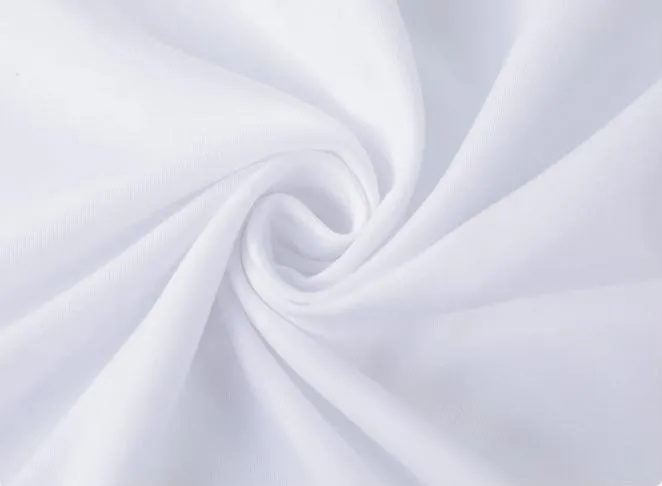
Bleaching white fabric is a common and essential process in the textile industry, especially for suppliers like me who deal with a wide range of bleached white fabrics. The interaction between bleaching and fabric finishes is a complex yet fascinating topic that significantly impacts the quality, appearance, and performance of the final textile products. In this blog, I'll delve into how bleaching white fabric interacts with fabric finishes, and I'll also introduce some of the products we offer as a Bleached White Fabric supplier.
Understanding the Bleaching Process
Before discussing the interaction with fabric finishes, it's crucial to understand the bleaching process. Bleaching is primarily done to remove natural colorants and impurities from the fabric, resulting in a clean, white base. There are different methods of bleaching, including chemical bleaching with agents like hydrogen peroxide or sodium hypochlorite, and mechanical bleaching through processes like sunlight exposure.
Chemical bleaching is more commonly used in industrial settings due to its efficiency and consistency. For example, hydrogen peroxide is a popular choice because it is relatively environmentally friendly and can be used at different temperatures depending on the fabric type. When bleaching, the agents break down the chromophores (color - producing groups) in the fabric's fibers, making them colorless. This is a delicate process as over - bleaching can damage the fabric's structure, weakening its strength and durability.
Types of Fabric Finishes
Fabric finishes are treatments applied to the fabric after bleaching to enhance its properties. There are several types of fabric finishes, including aesthetic finishes, functional finishes, and durable press finishes.
Aesthetic finishes are mainly used to improve the fabric's appearance. These can include processes like calendaring, which gives the fabric a smooth, shiny surface, or napping, which creates a soft, fuzzy texture. Functional finishes, on the other hand, are designed to add specific properties to the fabric. Examples include water - repellent finishes, flame - retardant finishes, and antimicrobial finishes. Durable press finishes are used to make the fabric wrinkle - resistant and maintain its shape after washing.
Interaction between Bleaching and Aesthetic Finishes
The bleaching process can have a significant impact on aesthetic finishes. For instance, if a fabric is over - bleached, its fibers may become brittle. When this fabric undergoes calendaring, there is a higher risk of the fibers breaking, resulting in a less smooth and even surface. The whiteness achieved through bleaching also affects the overall appearance of aesthetic finishes. A well - bleached fabric provides a pure white base, which can enhance the visual appeal of a shiny or textured finish.
In the case of napping, bleaching can influence the texture. A properly bleached fabric allows for a more uniform napping process. If the fabric has uneven bleaching, the napping may not be consistent, leading to a patchy appearance. As a supplier of Polyester Bleached Fabric, we ensure that our bleaching process is carefully controlled to provide an ideal base for various aesthetic finishes.
Interaction between Bleaching and Functional Finishes
Functional finishes are highly dependent on the fabric's structure and chemical properties, which are affected by the bleaching process. Water - repellent finishes work by creating a hydrophobic layer on the fabric's surface. If the fabric is over - bleached, the fibers may lose their natural structure, making it difficult for the water - repellent agent to adhere properly. This can result in a less effective water - repellent finish.
Flame - retardant finishes also interact closely with the bleaching process. Some bleaching agents can react with the flame - retardant chemicals, reducing their effectiveness. Therefore, it's essential to choose the right bleaching method and agents when a fabric is intended to have a flame - retardant finish. Our Polyester Sheet Fabric is processed with a balanced bleaching approach to ensure compatibility with various functional finishes.
Interaction between Bleaching and Durable Press Finishes
Durable press finishes rely on the fabric's ability to retain its shape after being treated with heat and chemicals. Bleaching can affect the fabric's fiber structure and its response to the durable press treatment. Over - bleached fabric may have a reduced ability to form the cross - links necessary for a good durable press finish. This can lead to a fabric that wrinkles more easily and does not maintain its shape as well.
On the other hand, a well - bleached fabric can provide a clean slate for the durable press treatment. The absence of impurities and natural colorants allows the chemicals used in the durable press finish to interact more effectively with the fabric's fibers. Our Bed Linen Fabric is carefully bleached to ensure optimal results when a durable press finish is applied, providing customers with long - lasting, wrinkle - resistant bedding.

Quality Control in the Interaction Process
As a bleached white fabric supplier, quality control is of utmost importance in managing the interaction between bleaching and fabric finishes. We conduct thorough testing at each stage of the process. Before bleaching, we analyze the fabric's raw material to determine the appropriate bleaching method and agents. During the bleaching process, we monitor factors such as temperature, time, and chemical concentration to ensure consistent results.
After bleaching, we test the fabric's strength, whiteness, and chemical composition. When applying fabric finishes, we conduct further tests to ensure that the finish is evenly applied and that it does not negatively interact with the bleached fabric. This multi - step quality control process allows us to provide high - quality bleached white fabrics that are suitable for a wide range of fabric finishes.
Impact on Product Performance and Market Demand
The proper interaction between bleaching and fabric finishes directly impacts the performance of the final textile products. Fabrics with well - integrated finishes are more likely to meet customer expectations in terms of appearance, functionality, and durability. For example, a bed sheet with a good water - repellent finish and a smooth aesthetic finish is more appealing to consumers.
In the market, there is an increasing demand for textile products with multiple functions. Consumers are looking for fabrics that not only look good but also offer practical benefits such as stain resistance, easy care, and long - lasting performance. By understanding and optimizing the interaction between bleaching and fabric finishes, we can produce products that meet these market demands, giving us a competitive edge in the industry.
Conclusion and Call to Action
In conclusion, the interaction between bleaching white fabric and fabric finishes is a complex but crucial aspect of the textile manufacturing process. As a bleached white fabric supplier, we are committed to mastering this interaction to provide our customers with high - quality fabrics. Our Polyester Bleached Fabric, Polyester Sheet Fabric, and Bed Linen Fabric are all carefully processed to ensure the best possible interaction with various fabric finishes.
If you are interested in our bleached white fabrics or have specific requirements for fabric finishes, we would be delighted to discuss your needs. Whether you are a clothing manufacturer, a home textile producer, or a distributor, we can provide you with customized solutions. Contact us today to start a procurement discussion and explore the possibilities of our high - quality bleached white fabrics.
References
- Textile Chemistry and Coloration by Lewis, David M.
- Handbook of Textile Finishing by Horrocks, A. R. and Anand, S. C.
- The Technology of Textile Pretreatment and Dyeing by Shore, J.