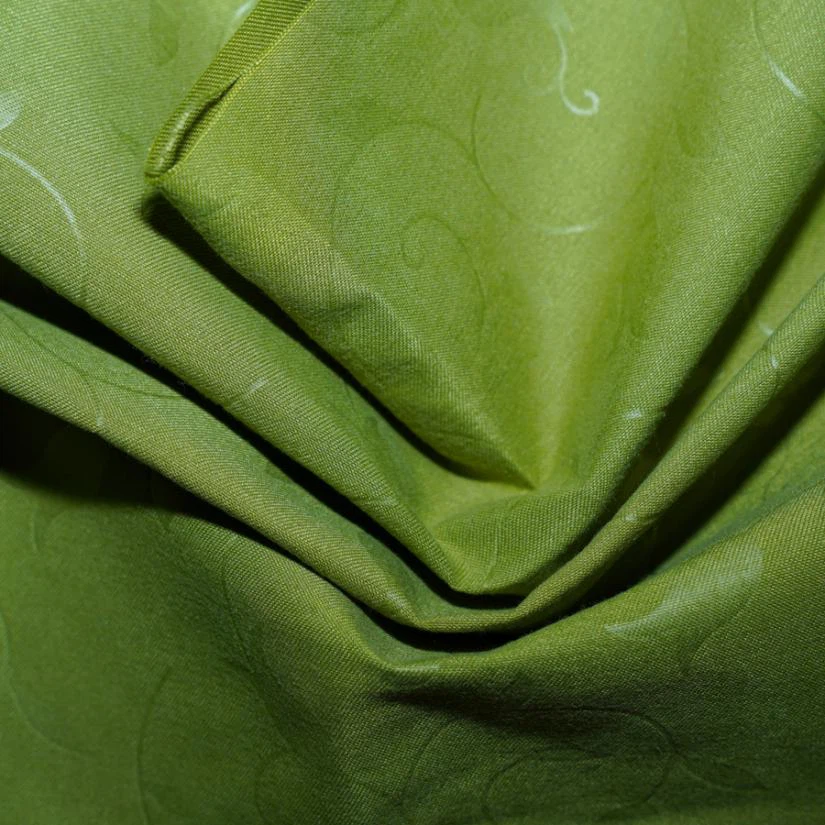
Hey there! I'm a supplier of Printed Woven Fabric, and today I'm gonna walk you through how colors are applied to these amazing fabrics. It's a super interesting process that combines art, science, and a whole lot of skill.
The Basics of Color Application on Printed Woven Fabric
First off, let's talk about why applying colors to printed woven fabric is such a big deal. Printed woven fabrics are used in all sorts of things, from clothing to home decor. The way colors are applied can completely change the look and feel of the final product.
There are a few different methods for applying colors to woven fabrics, but the most common ones are direct printing, resist printing, and discharge printing.
Direct Printing
Direct printing is probably the most straightforward method. It's like using a giant printer to put colors directly onto the fabric. In this process, a printing paste that contains the desired colors is applied to the fabric using a printing machine. The machine can use different techniques, such as screen printing or digital printing.
Screen printing is an old - school method that's still widely used today. It involves creating a stencil (or screen) for each color. The printing paste is then forced through the screen onto the fabric. This method is great for creating bold, solid colors and large - scale patterns. You can check out more about natural - looking prints on fabric at Natural Printing On Fabric.
Digital printing, on the other hand, is a more modern approach. It uses a digital file to control the application of ink onto the fabric. This method allows for incredibly detailed and complex designs. You can print anything from high - resolution photographs to intricate geometric patterns. It's also more environmentally friendly as it uses less water and chemicals compared to traditional printing methods.
Resist Printing
Resist printing is a bit more of a tricky process, but it can create some really cool effects. In this method, a resist agent is applied to the fabric before the dyeing process. The resist agent prevents the dye from penetrating the fabric in the areas where it's applied.
There are different types of resist agents. One common type is wax. The wax is melted and applied to the fabric in a specific pattern. When the fabric is dyed, the areas covered by the wax remain the original color of the fabric. After dyeing, the wax is removed, leaving behind a beautiful, reverse - dyed pattern.
Another type of resist agent is a chemical resist. This is often used in industrial settings. The chemical resist can be printed onto the fabric using a printing machine, and it creates a barrier that stops the dye from adhering to the fabric. Micro - scale prints on fabric, which can sometimes be created using resist techniques, are explored further at Micro Print Fabric.
Discharge Printing
Discharge printing is a unique method that involves removing color from a pre - dyed fabric. First, the fabric is dyed in a solid color. Then, a discharge agent is applied to the fabric in a specific pattern. The discharge agent breaks down the dye in the areas where it's applied, leaving behind a lighter or white pattern on the colored background.
This method is great for creating high - contrast patterns and for achieving a vintage or distressed look. However, it requires careful control of the discharge agent and the dyeing process to get the desired results.
Factors Affecting Color Application
Now, there are a few factors that can affect how colors are applied to printed woven fabric.
Fabric Type
Different types of woven fabrics have different properties, and these properties can impact the way colors are absorbed and retained. For example, natural fibers like cotton and silk absorb dyes differently than synthetic fibers like polyester.
Cotton is a very absorbent fiber, which means it can take up a lot of dye and hold onto it well. This makes it great for achieving bright, saturated colors. Silk, on the other hand, has a smooth surface that can give colors a more lustrous and elegant look.
Synthetic fibers like polyester are often more resistant to dyes. However, special dyes and printing techniques have been developed to work well with these fibers. Polyester can also be treated to improve its dye - affinity.
Color Fastness
Color fastness is a measure of how well a color stays on the fabric over time. It's an important factor, especially for fabrics that will be washed or exposed to sunlight frequently.
There are different levels of color fastness, and it depends on the type of dye used, the printing method, and the fabric itself. For example, some dyes are more light - fast than others, which means they won't fade as quickly when exposed to sunlight.
To ensure good color fastness, we use high - quality dyes and follow strict printing processes. We also test our printed woven fabrics to make sure they meet industry standards for color fastness.
Design Complexity
The complexity of the design also plays a role in color application. Simple designs with large areas of solid color are generally easier to print than designs with lots of small details or multiple colors.
For complex designs, digital printing is often the best option. It can accurately reproduce even the most intricate patterns. However, digital printing may have some limitations in terms of the size of the print area and the type of fabric it can be used on.
Quality Control in Color Application
As a supplier of Printed Woven Fabric, quality control is super important to us. We have a team of experts who oversee every step of the color - application process.


Before printing, we carefully select the dyes and printing methods based on the fabric type and the desired design. We also conduct color matching to make sure the colors on the final product match the customer's specifications.
During the printing process, we monitor the temperature, pressure, and other variables to ensure consistent results. After printing, we inspect each piece of fabric for any defects, such as uneven color distribution or missing details.
Why Choose Our Printed Woven Fabric?
We take pride in our printed woven fabrics. Our products are known for their high - quality colors, excellent color fastness, and beautiful designs. Whether you're a fashion designer looking for unique fabrics for your next collection or a home decorator in need of stylish fabrics for your projects, we've got you covered.
We offer a wide range of colors and patterns to choose from. And if you have a specific design in mind, we can work with you to bring it to life. Our team of designers and printers has years of experience in the industry, and we're always up - to - date with the latest trends and techniques.
Let's Connect!
If you're interested in our printed woven fabrics, I'd love to hear from you. Whether you have questions about our products, want to see samples, or are ready to place an order, just reach out. We're here to help you find the perfect fabric for your needs. Let's start a conversation and see how we can work together to make your projects a success.
References
- Textile Printing Technology Handbook, Various Authors
- Color Chemistry in Textiles, John Smith
- The Art of Fabric Printing, Jane Doe